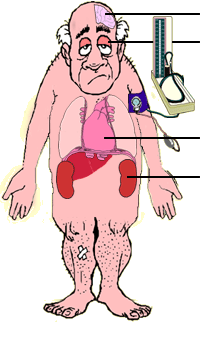
The clinical features of hypertension are non-specific, only occasional dizziness and headache. However, TCM believes that individuals can accompany signs that are associated with particular disharmony patterns. For example, when individuals belong to a yang pattern, they may have heat-manifested signs such as flushed face, bitter taste in mouth, irritability, yellowish urine, or constipation. Since these clinical features are usually mild and not obvious, most individuals would neglect and not report to their physicians.
Hypertension is most often diagnosed during a routine medical examination or a special screening program. When TCM physician diagnoses the disharmony patterns associated with hypertension, it usually means it has progressed to a stage where complications or organ damages have already occurred. Below are some disharmony patterns of hypertension.
Hyperactivity of liver-yang
High blood pressure, other accompanied symptoms include dizziness, ringing in the ears, distending headache (forehead particularly), irritability, insomnia and fitful sleep. In some cases, there may have flushed face, bitter taste in the mouth, blood-shot eyes, constipation and yellowish urine. The tongue is red and covered with yellow fur. The pulse is taut and rapid. In severe cases, individuals will experience nausea, severe headache, slurred speech, numb and shaking limbs that result in instability while walking.
Yin deficiency and yang hyperactivity
High blood pressure, other accompanied symptoms include lower back soreness, knee weakness, poor memory, and seminal emission. The tongue appears thin and tender, and is covered with little or no fur. The pulse is taut and thready or rapid. In severe cases, individuals may have headaches, flushed cheeks, throat dryness, skinny, irritability, and hot sensation in the chest, palms and soles.
Deficiency of both yin and yang
High blood pressure, other accompanied symptoms include low spirit, dizziness, blurred vision, palpitations, breath shortness while moving, limb coldness, lower back soreness, lower limb weakness, puffiness, night frequency, sex dysfunction, poor sleep or dream-disturbed sleep. The tongue is pale, and the pulse is taut, thready and forceless.
Liver-wind and turbid phlegm
High blood pressure, other accompanied symptoms include dizziness, fatigue, distending and heaviness sensations in the head, chest stuffiness, spitting of thick saliva, ringing in the ears, and blurred vision. In severe cases, individuals may experience limb numbness, sudden distortion of the face (facial paralysis), difficulty in speech, drooling and even paralysis of one side of body. The tongue is covered by greasy fur, and the pulse is taut and rolling.
Blood stasis blocking collaterals
High blood pressure, other accompanied symptoms include dizziness, stabbing pain in the head, palpitations, poor memory, spiritual fatigue, chest stuffiness or pain, limb numbness, dark-purplish complexion or lips, purplish tongue or purple spots on it, and the pulse is taut and hesitant, or knotted.
Generally, hypertension symptoms can vary from person to person, and the degree of severity may not coincide with the clinical stages. |